
Frequently Asked Questions
-
The project is in early development and timelines can change. We currently anticipate the project to start construction in early 2029. This will only happen after we have received approvals from regulatory authorities.
-
We take effort to disturb as little soil as possible during construction. Crews will regularly spray roadways and high dust activity sites to reduce how much particulate is created.
-
Growing evidence shows that properly planning solar installations can enhance, rather than harm, natural habitats. Well-designed projects support greater biodiversity and avoid sensitive ecosystems. Clēnera prides itself on working with local environmental experts to design, build, and maintain facilities that can preserve or enhance the local ecosystem.
-
No. Small increases in temperature can occur above the panels. This increase is dissipated quickly. Read more from a study conducted by Columbia University.
-
Modern utility-scale battery energy storage systems are designed, manufactured, and operated under strict safety codes and standards (e.g., International Fire Code, National Fire Protection Association, UL/IEC tests). Safety features include monitoring systems, thermal management, fire suppression systems, and compartmentalization to isolate failures.
These enhancements mean thermal events are vanishingly rare and, in the rare instance a fire breaks out, are often contained to a minimally small footprint.
-
Clēnera works with local fire departments and emergency services to educate them about our facilities and develop emergency plans that meet or exceed local standards.
-
PV panels are made up of hundreds of cells. These cells are two sheets of silicon glass semiconductors. When sunlight hits one sheet, it knocks free electrons into the other sheet. This electron is captured as a direct current. Panels tied together deliver a direct current to an inverter, which converts it to alternating current, which is how our power grid delivers energy to end users.
-
Several studies from multiple regions have shown solar facilities have little to no impact on property values. Read more here.
-
The “lake effect” theory suggests that large solar facilities look like lakes to birds and, subsequently, causes them to crash into the panels.
No evidence has been presented to conclusively support this theory. Alternatively, we have worked with wildlife specialists who surveyed one of our own projects for three years looking for this effect. The result found no evidence for the lake effect.
-
Glare would mean sunlight hasn’t been captured to be turned into energy. Modern solar panels are treated with an anti-glare coating to maximize the amount of captured light and further remove glare.
Additionally, the panels are on trackers that follow the sun. The angles created by this constant movement makes stray glare hitting a person on the ground very unlikely.
-
The project is expected to generate ~$37 million in property taxes, paid to the counties and divided between counties and cities, per MN Solar Energy Production Tax policy.
We anticipate this project will employ approximately 400+ skilled workers during construction. When operating, we expect to hire 15-20 permanent employees, plus seasonal contractors throughout the year.
-
Construction activity will generate noise. However, once operational, the facility generates almost no intrusive noise. Noise generators on site include small motors to tilt the panels to the sun throughout the day, inverters and power lines that will hum, like old refrigerators, and A/C units on the battery energy storage site.
Clēnera is completing a noise analysis as part of the project’s permit approval process to provide scientific evidence specific for this project.
-
No. Solar panels are primarily made up of silicon glass, aluminum or steel frames, and glue. No credible evidence has been found of leeching from panels.
Modern battery containers have significantly improved safety designs. It is unlikely to have a cell rupture, and unlikelier still to have the battery components leech out of the container.
Transitioning
Farmland to
Solar Farms
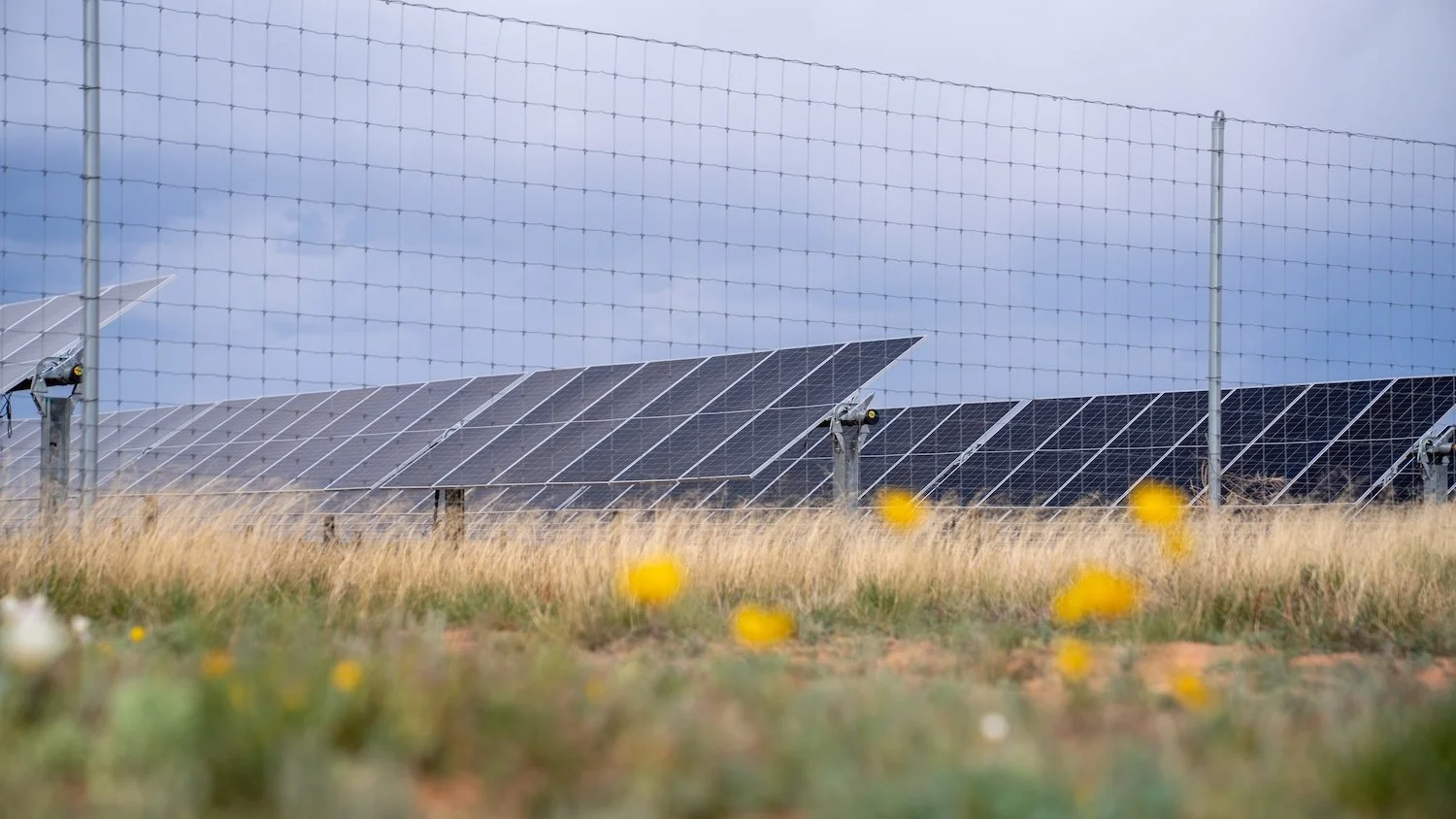
A common concern we hear is that utility-scale solar farms use too much productive farmland. We understand this concern and think there are important factors and contexts to consider.
Actual Footprint
Minnesota is home to about 25.4 million acres of farmland, of which about 16.7 million acres are considered “prime”.
The full footprint of the proposed Thousand Lakes Clean Power facility (including internal roads, setbacks, security fencing, and wetland delineation) is 2,500 acres. This is 0.00001% of the state’s farmland.
Habitat
Solar facilities can offer an opportunity to enhance biodiversity in an area. Instead of planting and harvesting annual row crops, Clēnera will work with local experts to plant a mix of prairie wildflowers, grasses, and forbs. Wildlife friendly fencing prevents humans from entering an operating facility while giving wild animals an opportunity to take advantage of the habitat within.
Property Rights
The Thousand Lakes Clean Power facility would be placed on 100% private property. The decision of this property owners was made for many reasons, not least of which is diversification of their family farm operations. Solar and energy storage provides stable, year-round income without the rising input costs of fertilizer, irrigation, or pesticides.
Conversion Back to Farmland
The actual footprint of a solar facility on the ground is minimal, often little more than the piles drilled into the ground on which the racking and panels sit. Following a solar facility’s planned lifespan, decommissioning and conversion back to farmland is much more feasible compared to other kinds of development, such as housing or commercial industrial uses.
This is a reason why many landowners choose to lease their land for renewable energy generation, as it preserves future options to convert the land use back to family farming.